

LEARN WHAT WE'RE ABOUT
THESSIA INSTITUTE ™
for the STUDY of human change & possibility
Thessia Institute is a practitioner training institute for therapists, coaches, facilitators, and other professionals who want to deepen how they perceive, understand, and facilitate human change.
The work begins with learning to see differently, to recognize the relationship between experience, belief, adaptation, pattern, and the larger relational systems a person lives within.
From there, practitioners learn to work with what is actually happening rather than reaching automatically for a prescribed process, developing the capacity to create interventions responsive to the person, the pattern, and the moment.
Applications are reviewed personally to ensure alignment and readiness for this work.
a different way to think about change
the PROCESS begins with perception
Human beings make sense in context.
What we've experienced shapes what we believe.
What we believe shapes how we adapt.
How we adapt shapes the patterns we live inside.
And none of this happens in isolation.
We develop inside relationships, families, cultures, environments, and systems that continually shape how we understand ourselves and the world around us.
For a practitioner, learning more techniques can only take you so far.
The deeper question is:
Can you accurately perceive what is happening?
Because the quality of an intervention depends first on the quality of the practitioner's perception.
who is this for
for practioners who want to SEE MORE
This training is for practitioners who are curious about what exists beneath the presenting problem.
For those who want to understand how experience becomes belief, how belief shapes adaptation, how adaptations become patterns, and how those patterns organize themselves across relationships and systems.
It's for practitioners willing to become more precise observers of themselves, their clients, and what is happening between them.
And it's for people who understand that becoming a more capable practitioner isn't only about acquiring more information.
It changes the way you see.

THE PRACTITIONER TRAINING
the pathway UNFOLDS
in THREE phases
The practitioner training at Thessia Institute is an immersive six-month educational experience for therapists, coaches, facilitators, and professionals committed to understanding and facilitating human change.
Rather than teaching a fixed sequence of interventions, the training develops the capacities that inform how interventions are chosen, created, and facilitated.
Participants learn to understand human behavior within its developmental and relational context, recognize the patterns maintaining a person's current experience, and explore how meaningful change becomes possible. Learning takes place through conceptual study, experiential immersion, live demonstrations, observation, reflection, and practice.
Throughout the training, participants are invited to examine not only the people they work with, but also themselves, the assumptions they carry, the ways they organize information, and how their own presence influences the work.
This is not simply learning something new. It is developing a different relationship with what you already see.
ONE TRAINING.
SIX MONTHS.
A DIFFERENT WAY OF SEEING.
ORIENTING PERCEPTION
Understanding the person and the patterns
Begin by examining how human experience is organized.
Explore identity, worldview, developmental experience, belief formation, adaptation, and the patterns that emerge across a person's life.
Develop foundational mapping skills and examine your own position as a practitioner.
DEEPENING PERCEPTION
Learning to recognize what is happening
Move from understanding concepts to tracking living processes.
Explore how patterns appear in real time, how relationships shape experience, and how to remain present with complexity without rushing toward interpretation or intervention.
Begin applying the learning through observation, practice, and feedback.
APPLICATION + INTEGRATION
Developing your own way of working
Bring perception and discernment into increasingly independent application.
Practice creating responsive processes, navigating uncertainty, recognizing professional boundaries, and reflecting on the quality of your work.
Integrate the learning into your existing practice and emerging professional identity.
a different way to think about change
learning what MOVES
FOUNDATIONAL VIDEO LEARNING
Pre-recorded lessons introduce the concepts, perspectives, and maps that orient each section of the training.
EXPERIENTIAL INTENSIVES
Live immersive experiences create opportunities to encounter the material directly, participate in guided exploration, and observe how change unfolds.
WEEKLY LIVE LEARNING
Facilitated group sessions provide space for questions, discussion, demonstration, applied learning, and integration.
PRACTICE PODS
Small-group practice develops observation, facilitation, reflection, and feedback skills within a supportive learning environment.
REFLECTION + INTEGRATION
Written reflections and applied assignments encourage participants to examine what they are learning and how it is changing their practice.
A SMALL COHORT
The training is designed for a small group of approximately ten participants, allowing room for meaningful participation, observation, and individual development.
SEQUENCED TRAINING PATHWAY
the pathway UNFOLDS in three PHASES
The RSI pathway develops practitioners progressively...from foundational perception to advanced relational leadership. Each phase deepens your ability to read systems, track adaptation, and work within relational environments with clarity and steadiness.
Across the full training pathway, practitioners build the perceptual capacity, steadiness, and relational literacy needed to support lasting transformation rooted in systemic reorganization rather than individual fixing.
Learn more about RSI Level 1: Foundations & Orienting The Self
Establishes the core architecture and conceptual foundations of relational systems work. It is designed to re-orient how practitioners understand human behavior before attempting advanced application.
Rather than learning techniques, practitioners learn to read the underlying relational patterns shaping behavior, attachment, conflict, and regulation.
You will learn to:
- Map internal & relational systems with clarity & precision
- Understand emotional home, emotional currency, & adaptive strategies
- Identify core needs, suppressed needs, & values in conflict
- Track relational dynamics as living, moving systems rather than static narratives
- Work with clients from a systems-aware, embodied presence
This training emphasizes experiential learning, applied case work, and practitioner self-location within relational fields.
Training structure:
- 8 week virtual program
- 7 weekly modules (approximately 4 hours each)
- 1 weekly live call (2 hours)
- one 2-day weekend intensive immersion (6-8 hrs each day)
- two 1-day virtual training retreats (6-8 hours)
- online community space with discussion topics & case studies
- access to online course for 1 year
Level 1 Foundations is both a professional foundation and a personal reckoning. Practitioners are expected to engage the material not only intellectually, but relationally.
Learn more about RSI Level 2: Deepening Relational Perception
Deepens the practitioner’s ability to perceive, track, and work within relational systems in motion. Where Level 1 establishes the architecture of Relational Systems Intelligence, Level 2 builds fluency...so practitioners can reliably apply RSI principles across diverse relational contexts without collapsing into technique or over-effort.
This training focuses on strengthening perceptual accuracy, expanding relational range, and working with adaptive strategies as they arise in real time. Practitioners learn to stay oriented to the system even when complexity, activation, or ambiguity increases.
You will learn to:
- Track relational systems dynamically across time, context, & role
- Work with emotional currency, power, & meaning-making in live relational exchanges
- Identify adaptive strategies as they emerge in-session rather than retrospectively
- Differentiate content from system, story from structure
- Intervene through perception, reflection, & relational positioning rather than technique
- Maintain nervous system steadiness while holding complexity
Level II is highly applied and relational. Practitioners engage in live case material, dyadic and group-based learning, and supervised practice environments designed to increase discernment, precision, and confidence.
Training structure:
- 8 week virtual program
- 7 weekly modules (approximately 4 hours each)
- 1 weekly live call (2 hours)
- one 2-day weekend intensive immersion (6-8 hrs each day)
- two 1-day virtual training retreats (6-8 hours)
- online community space with discussion topics & case studies
- access to online course for 1 year
This level marks a shift from learning RSI to thinking and practicing from RSI. Completion of Level II signals readiness to move toward advanced field-based leadership work.
Learn more about RSI Advanced: Applied Relational Systems Leadership
Advanced Practitioner Training is for practitioners who are ready to work at the level of emergent systems...where insight alone is insufficient, and relational presence becomes the intervention.
This level assumes strong relational fluency and is designed for practitioners whose presence itself shapes the field.
This training focuses on:
- Advanced relational tracking in real time
- Working with complexity, collapse, & activation in individuals & groups
- Practitioner nervous system capacity & leadership presence
- Field-based work, group dynamics, & relational emergence
- Ethical containment & discernment in advanced relational spaces
Training structure:
- 8 week virtual program
- 7 weekly modules (approximately 4 hours each)
- 1 weekly live call (2 hours)
- one 2-day weekend intensive immersion (6-8 hrs each day)
- two 1-day virtual training retreats (6-8 hours)
- online community space with discussion topics & case studies
- access to online course for 1 year
Advanced training is selective by design. Completion of Levels 1 & 2 does not guarantee acceptance into Advanced Practitioner Training.
what practitioners develop
a shift in How you see, think + PRACTICE
The training develops more than conceptual understanding. It strengthens the capacities that shape how practitioners engage with human complexity.
The goal isn't to produce practitioners who all work the same way.
It's to develop practitioners who can perceive more accurately, think more deeply, remain present with complexity, and make increasingly precise choices about what a particular person or moment requires.
Through study, experience, observation, and practice, participants learn to:
Make the internal world visible.
See where the internal and external worlds meet.
See where the internal and external worlds meet.
Build context that holds the work.
Create precise processes for charged experiences.
Train the eye to recognize and hold expansion.
Work confidently with the soma of both practitioner and client.
Work with the body's systems and the mind's meaning-making processes. .
The training doesn't teach practitioners what to do in every situation.
It develops the perception and discernment required to recognize what a particular situation may actually need.
this work asks something of you
THIS training may be FOR YOU for you if:
Are deeply curious about human behavior
Want depth rather than another collection of techniques
Are willing to question what you think you already know
Can remain in inquiry without rushing toward an answer
Want to develop your own judgment rather than borrow someone else's
Are willing to examine yourself as part of becoming a better practitioner
Care about precision, responsibility, and the quality of your work
Are willing to examine yourself as part of becoming a better practitioner
Are willing to examine yourself as part of becoming a better practitioner
this path isn't for everyone
RSI is ALIGNED for practitioners who:
Are ready to think systemically
Want depth and precision
Trust intelligence more than performance
Want to hold authority without domination
Are willing to put down agenda & be curious
Don't require a step-by-step framework
HEAR Kalyn's insights
Brunna found clarity
HEAR KRISTY'S STORY
Your Paragraph text goes Lorem ipsum dolor sit amet, consectetur adipisicing elit. Autem dolore, alias, numquam enim ab voluptate id quam harum ducimus cupiditate similique quisquam et deserunt, recusandae here. Lorem ipsum dolor sit amet, consectetur adipisicing elit.
christopher's lens
HEAR KRISTY'S STORY
Your Paragraph text goes Lorem ipsum dolor sit amet, consectetur adipisicing elit. Autem dolore, alias, numquam enim ab voluptate id quam harum ducimus cupiditate similique quisquam et deserunt, recusandae here. Lorem ipsum dolor sit amet, consectetur adipisicing elit.
from education to ecosystem
introducing the CW COACHING COLLECTIVE
For practitioners interested in developing their work within a collaborative professional environment, completion of the Thessia Institute training establishes eligibility to apply to CW Coaching Collective.
The Collective is a separate coaching practice and professional thought lab built around shared intellectual foundations, ongoing mentorship, consultation, experimentation, and practitioner development.
Within that environment, each practitioner develops their own areas of expertise, ways of working, processes, and offerings.
The Collective is not designed to produce practitioners who work identically.
It is designed to support the development of capable practitioners whose individual contributions strengthen a larger professional community.
Completion of the Thessia Institute training is required to apply to CW Coaching Collective. Admission is selective and is not guaranteed.
Practitioners within the Collective are:
Mentored & supported in ongoing practice
Embedded in a relationally intelligent professional environment
Held to ethical, relational, & professional standards
Part of a shared field of learning, reflection, & refinement
Supported in expanding beyond 1:1 work into groups, workshops, retreats, & collaborative offerings
A shared foundation. Distinctive practitioners.
CW Coaching Collective is an independent coaching practice and collaborative professional thought lab where practitioners continue developing their work through mentorship, consultation, experimentation, and ongoing learning.
Completion of the Thessia Institute practitioner training provides the foundational preparation required to apply to the Collective.
Within the Collective, practitioners build upon that shared foundation while developing their own areas of expertise, approaches, processes, groups, and experiences.
The goal is not uniformity. It is to create an environment where individual practitioners can develop their capabilities while contributing to a larger professional community.
Completion of the training does not guarantee admission to CW Coaching Collective.
“
a thought from the founder
I don't believe the future of human change lies in endlessly creating new techniques. I believe it lies in developing practitioners who can perceive more, think more deeply, and recognize what is actually happening beneath the surface. Thessia Institute is my contribution to that future.
MEET THE FOUNDER & CEO
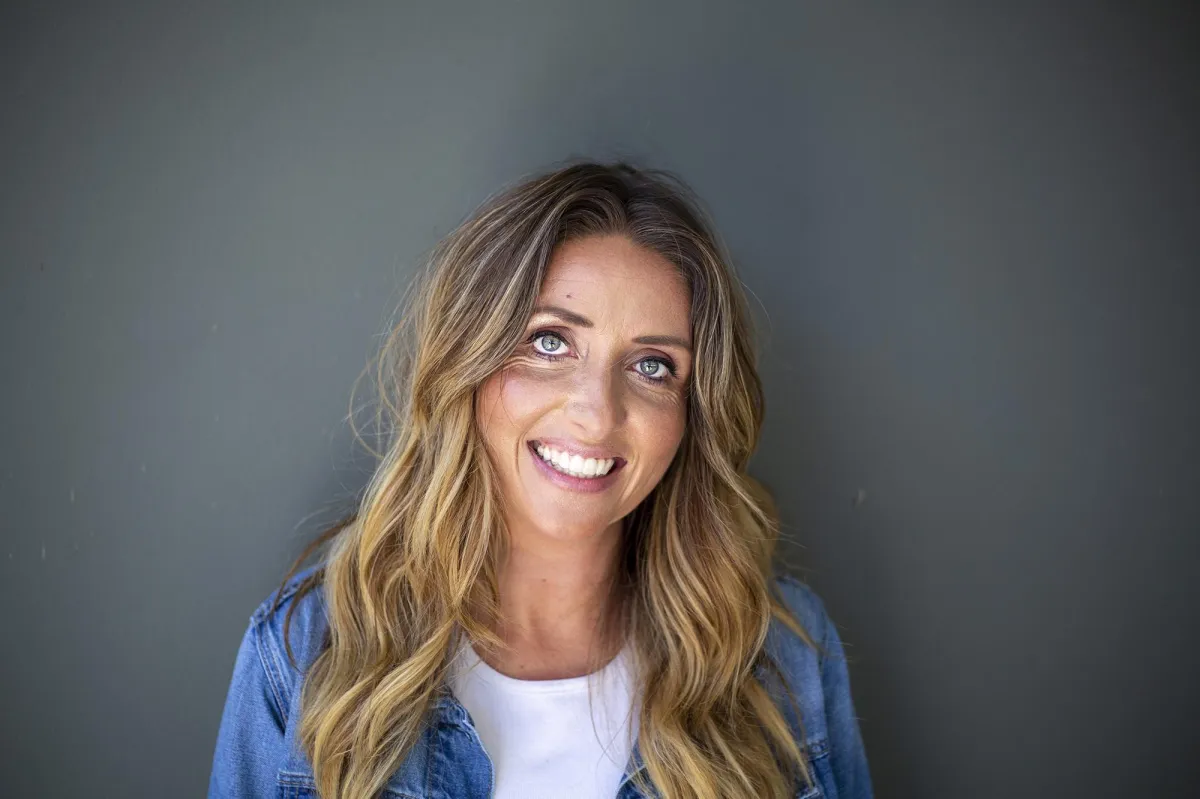
I'm Christalyn
I'm Christalyn Warner, a Licensed Marriage and Family Therapist and the founder of Thessia Institute and CW Coaching Collective.
My work has emerged from decades of personal exploration, professional study, and direct experience with the complexity of human change.
Over time, I became increasingly interested in the relationship between what people experience, what they come to believe, how they adapt, and the patterns through which they continue organizing their lives.
I wanted to understand not only why people become who they are, but what makes it possible for them to change.
That inquiry became the foundation of my work.
Thessia Institute was created to bring this understanding into practitioner development—to help people see more clearly, think more deeply, and become increasingly capable of facilitating meaningful change.
I believe the future of this work depends not simply on developing better methods, but on developing the people who use them.
MEET THE FOUNDER & CEO
I'm Christalyn
I'm a licensed marriage and family therapist, group field facilitator, and relational systems practitioner.
After a decade of clinical practice across trauma-informed, attachment-based, somatic, and systems-oriented frameworks, I began to recognize a structural limitation across even the most respected models of change: they were working primarily with individuals, while the forces shaping human behavior were relational and systemic.
The Relational Systems Institute exists to address that gap.
What emerged from this work is Relational Systems Intelligence™, a meta-philosophy, not a modality. A framework that teaches practitioners to understand symptoms as intelligent adaptations to relational environments.
Rather than focusing on fixing individuals, RSI trains practitioners to read relational fields, track adaptation within systems, and intervene where meaningful change actually becomes possible.
This training is for practitioners who want to move beyond surface-level and technique...and into relational precision, systemic awareness, and ethical authority.
I'm not waiting for the field to catch up.
I'm building the infrastructure for where it's going, and I'm looking for the practitioners who are ready to go there.
relational systems institute
“
from the beta group
I feel more confident holding safe space for clients to explore their inner landscape. With the understanding that through genuine, thoughtful questions and compassionate, embodied presence, clarity and expansion can emerge naturally.
- Alexis Cornell
begin your journey
INVESTMENT
move at your pace
6 months of PRACTIONER development
Founding Student $6500
Student $8500
Payment plans available.
Payment installments available via Klarna
flexibility is a priority
tWO PAYMENT OPTIONS
Full payment
INSTALLMENTS VIA KLARNA
WHY PRACTITIONERS COME HERE
BECOME more CAPABLE of the WORK you want to do
A practitioner can have years of education, extensive training, and a sophisticated collection of tools—and still struggle to understand what is actually happening with the person sitting in front of them.
Not because the tools are necessarily wrong.
But because the quality of our work depends on something that precedes technique: our ability to perceive.
What are we noticing? What are we overlooking? What assumptions are shaping our understanding? Are we responding to the presenting problem, or are we able to recognize the larger pattern maintaining it?
And perhaps most importantly:
Can we remain in genuine exploration long enough to discover what this particular person, relationship, or moment actually needs?
Thessia Institute was created to develop that capacity.
We believe practitioner development must go beyond accumulating knowledge. It must deepen the person doing the work—their perception, discernment, presence, relational capacity, and ability to respond thoughtfully to human complexity.
The aim is not to replace existing disciplines or dismiss the value of established approaches.
It is to develop the practitioner who carries them.
Strengthen practitioner presence and authority in complex relational environments
Develop a systemic lens that reveals the relational environments shaping human behavior
Understand symptoms as intelligent adaptations rather than problems to eliminate
Move beyond technique-stacking and into clear relational perception
Learn to work where change actually occurs...within relational systems, not isolated individuals
Join a training environment designed for depth, discernment, and long-term practitioner development

we value curiosity
Frequently Asked Questions
What is the Relational Systems Institute?
The Relational Systems Institute is a practitioner training institute devoted to the development of Relational Systems Intelligence™ (RSI)...a way of working with human systems that trains the practitioner as a whole-body, relational instrument.
Rather than teaching a model to apply, the institute develops a practitioner’s capacity to perceive, track, and work within living relational systems...bringing clients toward greater coherence, integration, and wholeness.
How is this different from traditional therapy or coaching training?
We honor the lanes of human work that came before us.
There are many necessary and valuable lanes in the helping professions:
Lane One: Agency and community mental health work, focused on stabilization, access to care, and support within complex systems
Lane Two: The therapy world, where practitioners are trained in specific models, diagnoses, and evidence-based frameworks
The Relational Systems Institute exists in a third lane.
This is a lane of healing, growth, and expansion, where the practitioner themselves is trained as the primary instrument of the work. We believe that embodied presence, relational capacity, and systemic awareness are as essential as technique.
This training does not replace therapy models or invalidate them. It deepens the practitioner who carries those models.
Is this a certification or licensure program?
No.
This is not a certification, licensure, or credentialing program. Completion of training does not grant the right to teach, certify, or represent the framework independently.
The focus is practitioner development, discernment, and depth...not titles or credentials.
Who is this training for?
This institute is designed for experienced practitioners, including:
- Therapists
- Coaches
- Facilitators
- Group leaders
- Practitioners working relationally with individuals, couples, or groups
Applicants should already be working with people professionally or preparing to do so in a serious, ethical way.
Is this training trauma-informed?
Yes.
The work is grounded in relational, developmental, and nervous-system awareness. At the same time, this training is not therapy and does not replace personal therapeutic support.
Practitioners are expected to maintain appropriate personal and professional support while participating.
Is this training appropriate if I'm in crisis or active instability?
No.
This training requires stability, self-regulation, and the capacity to engage responsibly in relational spaces.
Applicants experiencing acute crisis are encouraged to seek appropriate support before applying.
Can I use what I learn in my own practice?
Yes, with discernment and ethical responsibility.
Practitioners may integrate the learning into their own work while honoring their professional scope and existing training.
Representing oneself as an authority, teacher, or official representative of the framework is not permitted without explicit authorization in the future.
Do I need to be licensed to apply?
Licensure is not required.
However, applicants must demonstrate:
- Emotional & relational maturity
- Capacity for self-reflection & responsibility
- Respect for scope of practice & ethical boundaries
This training is not designed for personal healing only, nor for individuals early in their professional development.
How do I apply for trainings?
Applications for each level open periodically. Be sure to get on our mailing list or fill out an interest form to be notified of future application cycles.
When applications are open, you will complete:
- A written application
- Potential follow-up call
All applicants will be notified of acceptance, referral to a future cohort, or non-acceptance.
What are the cohort sizes for each training level?
Level 1 cohorts are intentionally small, which ensures depth, safety, and relational integrity within the training field.
Typical cohort size: approximately 10 practitioners
Level 2 cohorts are slightly larger, while building upon depth and relational integrity.
Typical cohort size: approximately 15-20 practitioners
Advanced Practitioner Training cohorts are larger, while still maintaining relational integrity.
Typical cohort size: 20-35 practitioners
Must the trainings be taken sequentially?
Yes.
Each level builds upon the previous training and practitioners must complete the pathway sequentially.
There are no exceptions. This ensures shared ethical grounding, language, and relational orientation.
Does completion of the prerequisite training level(s) guarantee acceptance into the next training level?
No.
Completion of each training level allows practitioners to apply to the subsequent training.
Acceptance is selective and based on readiness, alignment, and demonstrated capacity.
Are payment plans available?
Limited payment plans may be available and are shared after acceptance.
Applicants are encouraged to apply only if they feel prepared to meet both the financial and time commitments.
What happens after completing all three trainings?
After completing the RSI pathway, practitioners may apply to work within The Collective.
Acceptance into The Collective is selective and based on:
- Relational capacity
- Ethical alignment
- Readiness to practice within a shared professional ecosystem
What is The Collective
The Collective is a mentored, relationally intelligent professional ecosystem for practitioners who have completed the institute’s training pathway.
It is not a directory or a drop-in network. It is an ongoing relational field with shared standards, mentorship, and professional integrity.
How selective is the application process for entering The Collective?
The application process is intentional and selective.
Not all applicants are accepted.
This discernment protects the integrity of the work, the practitioners, and the clients they serve.
relational systems institute
HEAR IT FROM SATISFIED practitioners
SOME kind WORDS
“
This training gave me the freedom to move closer to what I believed was true before I started working with clients in a very modality-driven way. RSI taught me to stop leaning on tools and instead be aware of the field and how to honor it, first and foremost.
— anna
After completing this training, I feel much more confident in the coaching aspect of the style of work that I offer. Building a strong, rooted relational field and remaining in a state of allowing has been extremely helpful. I look forward to applying these concepts and understandings within my coaching practice.
— alexis c.
I find myself having a lot less pressure on my shoulders in maintaining conversation or trying to fix anything. In turn, I'm holding space better and I feel clients softening with me as though there's a growing sense of safety in our dynamic.
— alexis

✳
if you're still reading
this MAY be YOUR WORK
Develop the Capacity This Work Demands
This training is for practitioners who want to see more clearly, think more deeply, and become increasingly precise in the way they work with human change.
You don't need another identity to adopt.
You don't need to become a version of someone else.
You need the capacity to perceive what is happening, remain in relationship with what you find, and develop the discernment to know what might actually move it.
If that is the kind of practitioner you want to become, we'd like to hear from you.
.


